
More than a Bird Count
A cold morning, a clipboard of numbers, and a reminder that showing up is sometimes the most important data point of all.

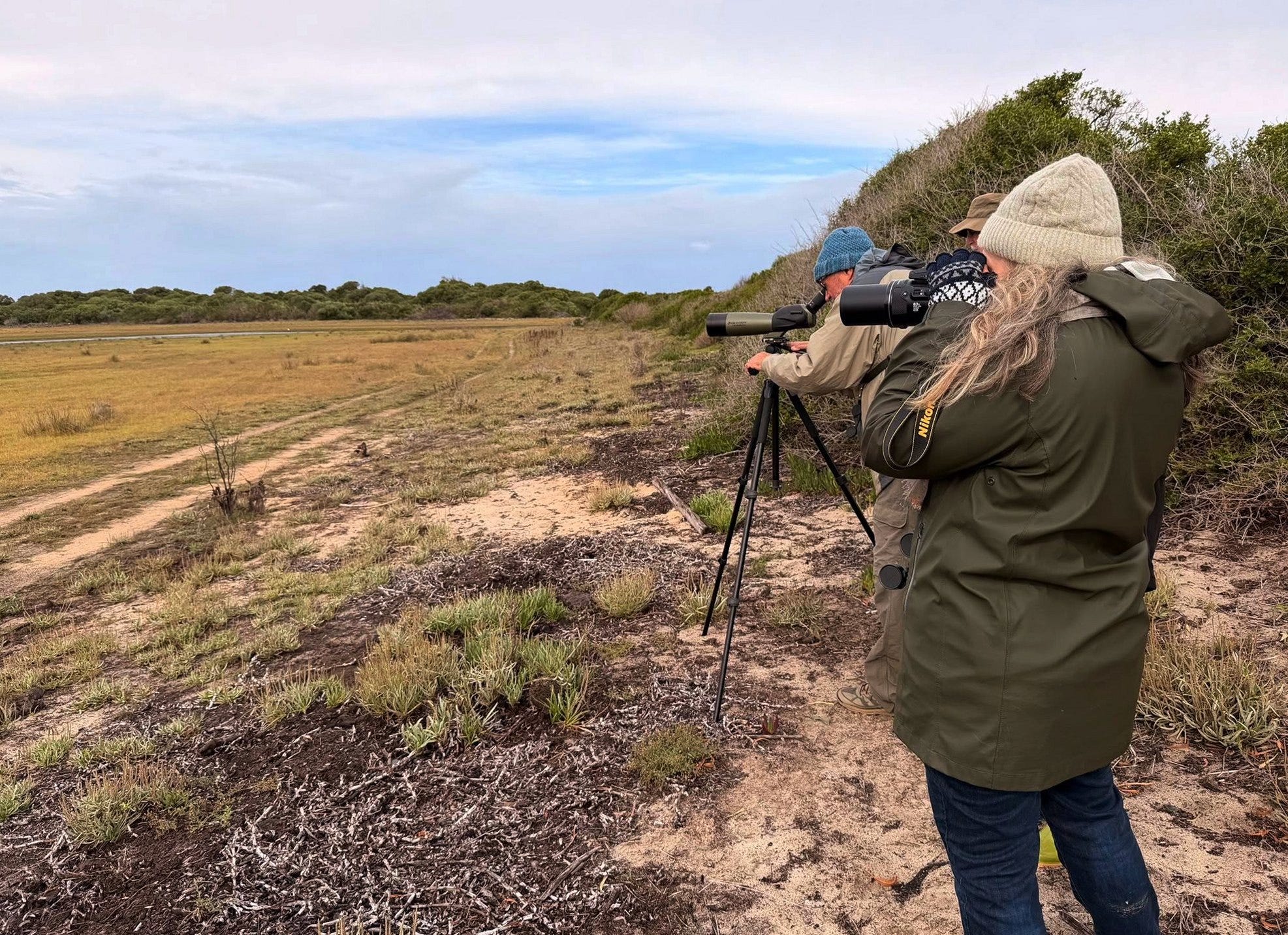
Coordinated Waterbird Counts(CWAC) turn individual observations into long‑term data, tracking changes in waterbird populations and wetland health over decades. This post captures one winter morning’s count at Kleinmond and Rooisands — a reminder that reliable science starts with showing up, whatever the conditions.
Most volunteers on a CWAC count take it very seriously. If you sign up… you show up.
I’m one of the volunteers to help with the counts at Kleinmond and Rooisands Nature Reserve — part of the Bot River Estuary system. It was my turn to “show up” on the day Winter also decided to show up. With vengeance!!
The day before was icy cold. The wind was howling and it was raining. I kept checking my phone, fully expecting a message cancelling the outing. If I must be honest, I was also crossing my fingers in the hope that I could stay “hiding” in the comfort of my warm home.
Instead, messages came through: “See you tomorrow. Be ready.”
At 5am, my alarm went off.
It was still dark. Still raining. Still cold.
My bed, on the other hand, was warm, cozy, and making a very strong argument for me to stay in.
But its CWAC. I signed up – I show up!!
Wrapped in layers — jacket, beanie, gloves and, yes, a frokkie (for my non-South African friends, that’s a vest/spencer), I scrambled into the car with my fellow committed (or slightly mad) birders.
From somewhere inside a scarf a voice mumbled good morning and questioned “Why on earth are we doing this?”. I was too cold to reply and offered a flask of coffee as a peace offering instead.
CWAC is one of South Africa’s most important citizen science projects, helping track waterbird populations over time so we can understand how our wetlands — and the birds that depend on them — are doing.
My favourite kind of birding is wandering along a path looking out for anyone or anything intersting. No plan. No pressure. No goals. Just undisciplined meandering and “bumping” into birds. As a result, I find participating in the count challenging at the best of times.
Every now and then, while participating in this project I have to keep reminding myself:
Today, you are not a casual birdwatcher.
Today, you are a Serious Data CollectorToday you are a Citizen Scientist
It’s harder than you think.
Especially when there are mushrooms to identify, caterpillars and beetles to inspect, unusual seed pods to pick up and wide open horizons to stare at.
Kleinmond — cold start, warm reward
Our count started at the mouth of the Estuary in Kleinmond, a small coastal town tucked into the beautiful Kogelberg Biosphere Reserve.
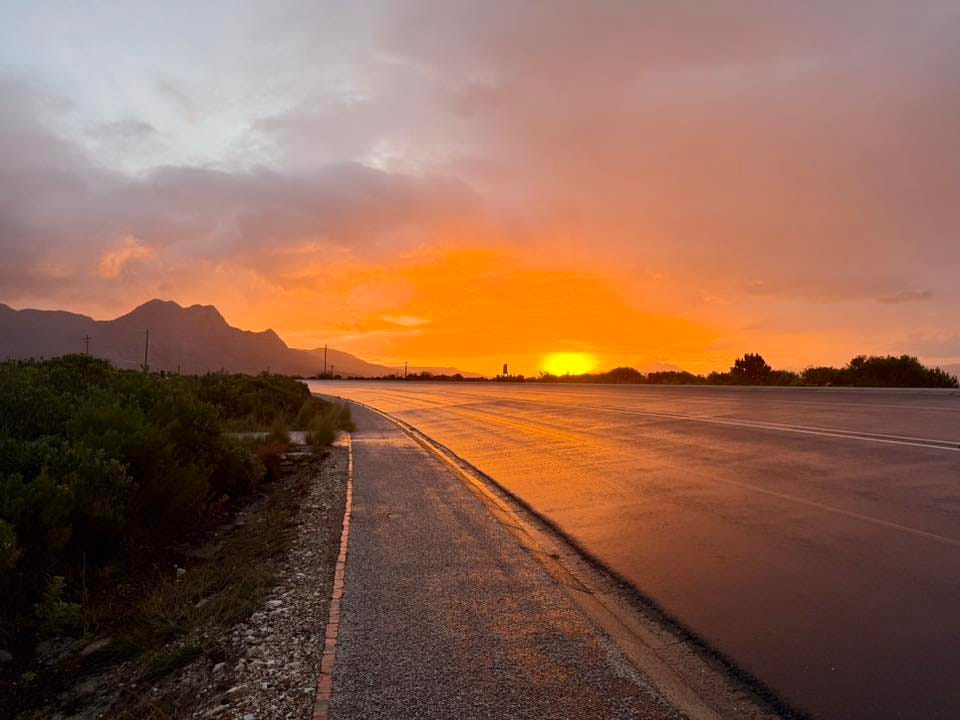
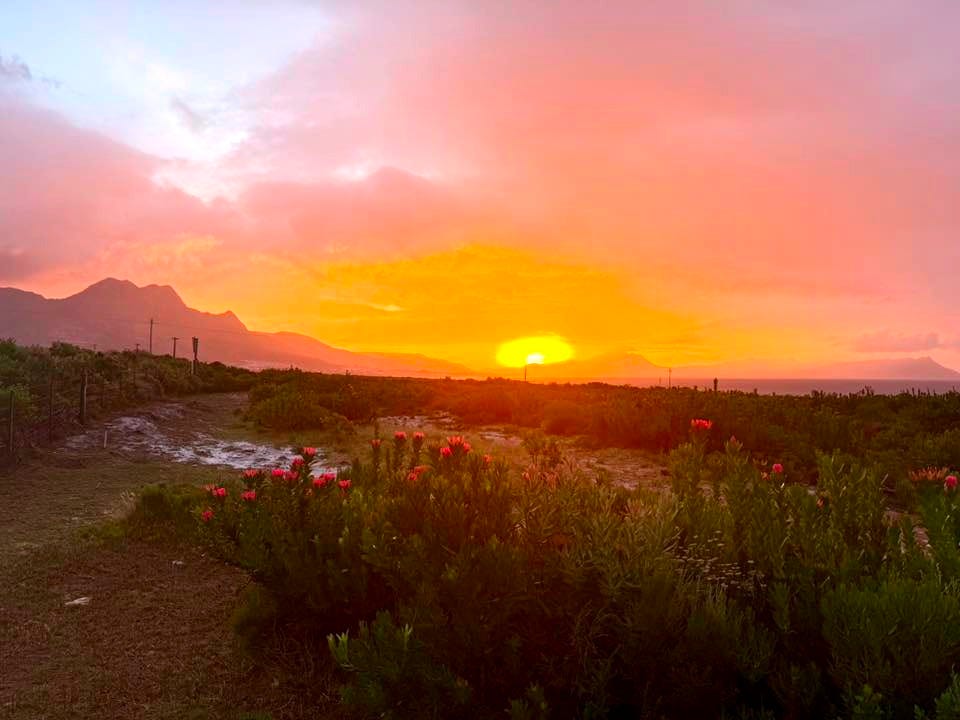
On the way, we were treated to a sunrise that felt like a small reward for our early start — glowing orange against wet roads and mountains, with proteas reaching up like they were part of the show.
Already, I was glad I’d hauled myself out of bed.
First bird of the day?
A Giant Kingfisher. We’re almost guaranteed to find this beautiful bird here. He’s a regular, but still a treat to find..
The usual suspects followed:
Hartlaub’s Gulls
Kelp Gulls
Grey-headed Gulls
Pied Kingfishers
Three-banded Plovers
Reed Cormorants
A family of 13 Egyptian Geese.
From there, we wandered along the boardwalk across the Estuary toward the beach.


A Common Moorhen popped up to greet us, followed by:
Yellow-billed Ducks
Western Cattle Egrets
Red-billed Teals
The beach is always a highlight for me — mostly because of one tiny, delightful bird: the White-fronted Plover.
Despite the wind, we found three huddled behind dry kelp, low against the elements, their backs turned against the wind. Their eyes seemed half closed like they’d simply decided to wait it out.
Further along — another flock of twelve were counted all huddled against the elements. So intriguing.


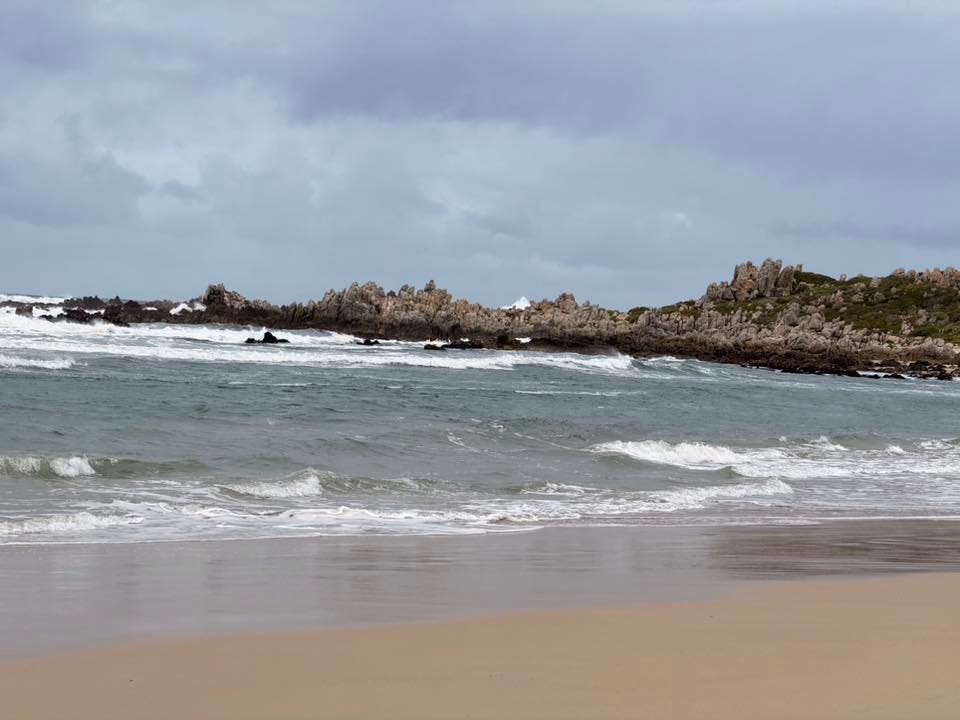
The sea was wild but that didn’t stop a Gannet fly past and an African Oystercatcher balance on the rocks.
In total, we recorded 20 waterbird species in that small stretch. Not bad at all, considering the weather — and the absence of summer migrants.
Rooisands Nature Reserve — a birder’s wonderland
Rooisands greeted us with a flock of 32 Kittlitz’s Plovers bobbing through a shallow body of water nearby.
Thirty-two! I don’t think I’ve ever seen that many together before.
Red-capped Larks were scuttling around nearby which for me was surprising as I’d never seen one at Rooisands before. They’re so tiny (24g) that they’re easy to miss.
The boardwalk to the hide is currently being repaired — so the entrance was technically closed. This meant us squeezing through a hole in the fence.
Let’s just say… it was not my most graceful moment.
There was much bantering.
There were threats of photographic evidence.
There were counter-threats involving binocular sabotage.
All very professional.
By now, the wind had picked up, and the cold had settled in properly.
But the birds didn’t care — and we tried not to care either.
Highlights included:
179 Yellow-billed Ducks – never seen so many at any one time
A lone Grey Plover — perhaps lingering before heading north
Two wind-blown Grey Herons
Three Reed Cormorants
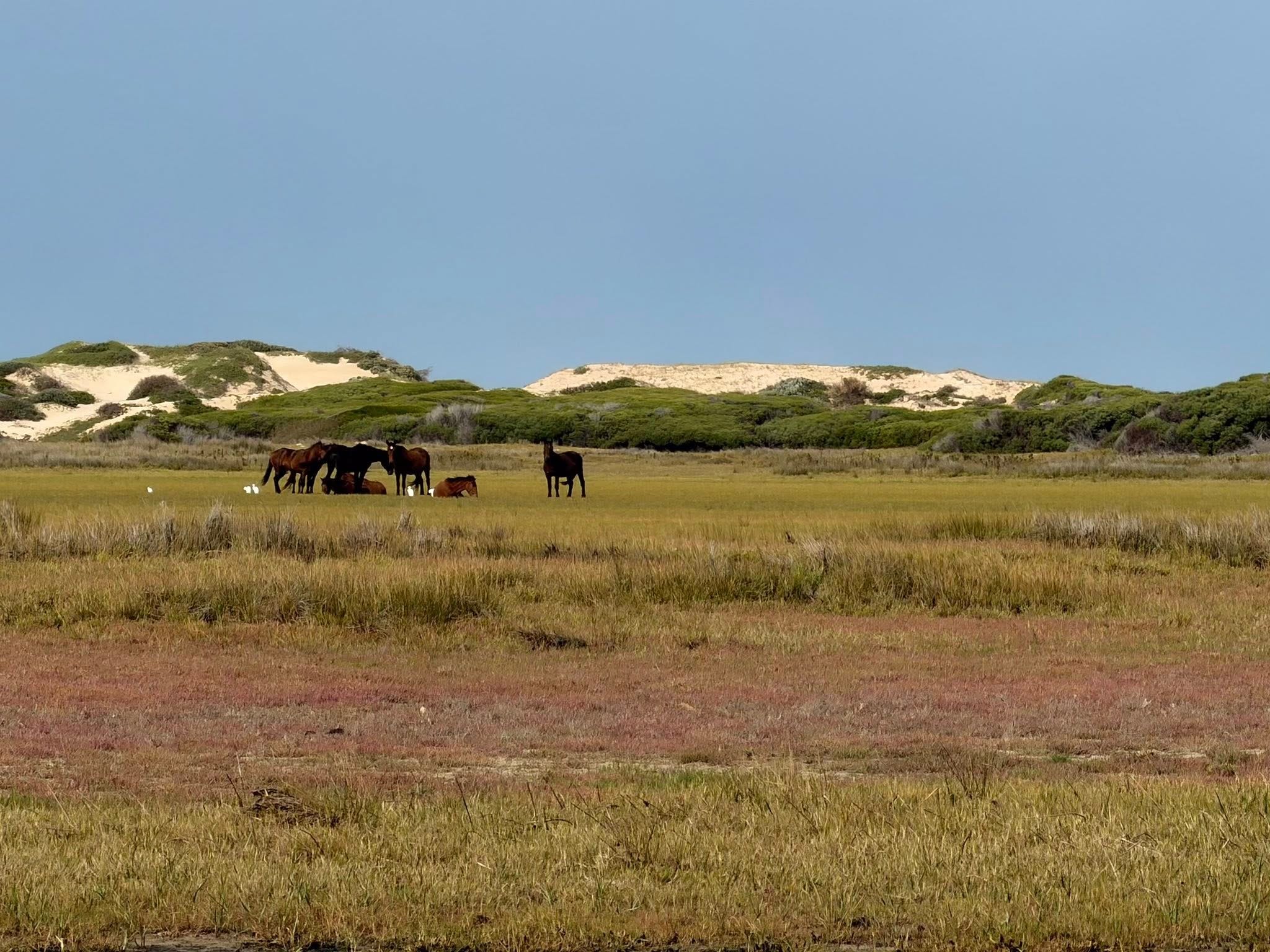
And then… the wild horses. Rooisands’ loved icons.
I allowed myself a pause here — just to watch — while also (very responsibly) counting the Western Cattle Egrets keeping them company.
Five, if you’re wondering.
In front of the hide is a large wide flat area which floods in the rainy season. However, today it was relatively dry and there was only one lone Blacksmith Lapwing. I’m sure in July when we count again it will be different.
From the hide, we walked along the estuary edge and were rewarded with a beautiful sighting of an Osprey overhead.
These birds migrate north for winter, and I couldn’t help imagining this one had come to bid goodbye until August/September if all goes well.
In total, Rooisands gave us:
27 waterbird species
(29… if we generously include the lark and a Bar-throated Apalis singing his heart out)
Not bad at all, given the weather and high-water levels.
With one final, slightly ungraceful exit through the fence, our count was complete.
Another set of numbers.
Another small contribution.
Added to a dataset that has been building for over 20 years.


Why it matters
CWAC isn’t just about counting birds (although yes, there is a lot of counting).
It’s about noticing change over time — in bird numbers, in movement patterns, and ultimately in wetland health.
These counts help scientists track:
population trends
migration patterns
and the health of our wetlands
Because when waterbirds change… it usually means something else has too.
Final thought
It may have been cold.
It may have been wet.
It may have required a 5am start and an undignified fence manoeuvre…
But I’d do it again in a heartbeat.
Because sometimes, being a “serious bird counter” just means showing up — and paying attention.
Have you ever joined a bird count — or would you? And what’s your “bad weather limit” before you bail?
Your account of the thrills and challenges of being on a bird count team hits home. I help at spring and winter counts here in the Chicago area. It's not so difficult to roll out of bed for the spring count, but the winter one can be brutal. Recently we've had a couple years in a row when the temp at dawn was hovering around 0F (-17C). The motivator on days like that is: If the birds can endure this, so can I! ;)
I'm not a birder but used to like the challenge of photographing birds. The patience, background reading and learning from others. Your comment of sometimes ‘just watching’ is pertinent.
I hope the weather is better next time. Keep up the good work!